February 18, 2015 -- Helios Labs We announced not too long ago about our plans to make a "CityFarm" in Bangkok. It was inspired by MIT's CityFarm project, but apparently the name "City Farm" is very common and already being used by a group in Bangkok.
So we're now going with "UrbanAg BKK" and we've also got some progress to report. We bought and set up a Raspberry Pi B+ (from Home of Maker, Fortune IT Mall). The same night we crashed through the process of using Twython to create automated tweets through our new @UrbanAgBKK account (using this tutorial here). You can see by looking at our timeline, the measured input it was automatically reporting (every minute) was the CPU temperature of our Raspberry Pi.
The next step will be capturing and tweeting images using a webcam. Then, once the rooftop garden is being set up, it will begin sending images specifically of that project. For people interested in following the project, it will be useful for them. But more importantly, it will be useful for us because we'll be able to monitor and literally see it no matter where we are. Eventually we plan on making it a two-way process, where it is sending us data automatically and we are able to send it input over the Internet as well.
Back to the name, UrbanAg BKK,we didn't want to limit it to just rooftops. The original aquaponics prototype we've automated is entirely indoors. The city is an intricate labyrinth of alleys, balconies, rooftops, and odd spaces of all kinds. Filling unused or underused space with agriculture is appealing for many people for so many reason. Where would you build an urban garden?
Follow Helios Labs on Twitter @HeliosLabs or find us on Facebook here.
Showing posts with label Announcements. Show all posts
Tuesday, February 17, 2015
Friday, January 16, 2015
Smart Farming Taking Shape
January 16, 2015 As part of coverage for our maker magazine, BIT and our social project, Progress Thailand, we've gone on several trips in Bangkok and well beyond it to study the different parts needed to build the perfect smart farm. First we learned about soil testing with Dr. Prateep Verapattananirund to hone in on the precise amount of nutrients crops need to be healthy while being sure not to over fertilize them, saving money in the process.
Then we went to Mahidol University to learn about agricultural drones with Dr. Teerakiat Kerdchaoen. We would learn about how open source hardware and software is helping researchers with limited budgets keep pace with emerging technologies and their application out in the field.
And now, we've just returned from the remote sub-district of Pa Deng, Phetchaburi where we learned about designing, building, and maintaining an entirely independent power grid using solar power and biogas. The entire team comprised of volunteers, many of whom fit the description of DIY'ers, or makers. With little to no government backing, the project was basically a large-scale DIY power grid.
Soil testing, autonomous agricultural monitoring and maintenance, and on-site power production when put together begins to add up to the ideal "smart farm." Combined with our own efforts, using 3D printing to fabricate custom automated systems for our own urban agricultural project we are trying to think about the next couple of steps.
Then we went to Mahidol University to learn about agricultural drones with Dr. Teerakiat Kerdchaoen. We would learn about how open source hardware and software is helping researchers with limited budgets keep pace with emerging technologies and their application out in the field.
And now, we've just returned from the remote sub-district of Pa Deng, Phetchaburi where we learned about designing, building, and maintaining an entirely independent power grid using solar power and biogas. The entire team comprised of volunteers, many of whom fit the description of DIY'ers, or makers. With little to no government backing, the project was basically a large-scale DIY power grid.
Soil testing, autonomous agricultural monitoring and maintenance, and on-site power production when put together begins to add up to the ideal "smart farm." Combined with our own efforts, using 3D printing to fabricate custom automated systems for our own urban agricultural project we are trying to think about the next couple of steps.
Labels:
AgTech,
Announcements,
concepts
Sunday, January 4, 2015
BIT: Thailand's Maker Magazine
January 4, 2015 Going to a couple of makerspaces here in Bangkok we realized there was a need to promote them. Since I like going to makerspaces and using their facilities, I would like them to be successful and stay in business so I can keep going. The problem with the maker community in Thailand is that it is small and there are not many people who have time to promote it.
Enter BIT Magazine. It was a news site we were working on but this seems like a much better idea. Hopefully people begin sending in their stories and we can start promoting the maker community here in Thailand, and connected Thai makers with the maker community worldwide.
Follow Helios Labs on Twitter @HeliosLabs or find us on Facebook here.
Enter BIT Magazine. It was a news site we were working on but this seems like a much better idea. Hopefully people begin sending in their stories and we can start promoting the maker community here in Thailand, and connected Thai makers with the maker community worldwide.
Follow Helios Labs on Twitter @HeliosLabs or find us on Facebook here.
Labels:
Announcements,
makerspace
Friday, January 2, 2015
What's in Store for 2015?
![]() | |
| It was only in October when we made our first small concrete planter. |
It was just over the past few months that several makerspaces have opened in Bangkok making all of this possible. So what will a full year of access to these spaces bring?
The Arduino-driven 3D printed fish feeder was just the first, small project of an entire concept called CityFarmBKK. We want to basically make a Farmville you can manage with minimal effort at home, and also connect with and monitor with your mobile device. Instead of sending your friends a virtual basket of vegetables or products from your virtual farm, how about sending them real gifts from a real urban farm?
We also plan on tackling biogas production, but to power homes rurally, and as part of an urban, automated bioreactor system. Our first attempt was a bit disappointing so later this month we will be taking a field trip to a village powered by biogas to see how it is really done.
![]() |
| We're finally 3D printing! |
Finally, just over New Year's, we've been digging in rice fields in Petchaburi province to take soil samples as part of our exploration of precision farming. For Thailand, agriculture is life, and technology is ready to help make it easier, more efficient, and more profitable than ever. A lot of this technology either already exists or is far along in development elsewhere around the world. All it needs is to be adapted to the type of agriculture practiced in Thailand. Maybe along the way we can develop something new.
Labels:
Announcements,
projects
Thursday, December 18, 2014
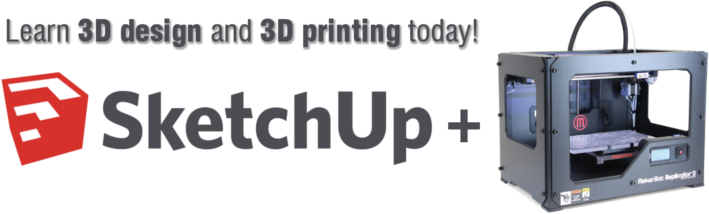
SketchUp 8 to 3D Printing
December 18 Just down Ratchada Road, Bangkok Thailand, on the 4th floor of Fortune IT Mall is Gravitech's new Home of Maker makerspace. In addition to being an extensive DIY electronics store, Home of Maker also has electronic benches, a 3D printer, and a classroom for lectures, workshops, and classes.
The 3D printer is particularly interesting to us because as a small design studio we have many 3D models on hand and every once in a while we think how great it would be to print them out into actual objects. Now when we design something, we can hop on the MRT subway and in 10 minutes do just that ... the whole process taking half a day.
Our first project was a 3D stamp for our Progress Thailand project. It took 10 minutes to fully design in SketchUp and with the .stl plugin described here in this older tutorial, we exported it as an .stl file and brought it on a thumbdrive to Home of Maker. There, the friendly and informative staff helped import it into MakerBot's software before transfering it to the printer itself (a MakerBot Replicator 2) to be printed.
The 3D printer is particularly interesting to us because as a small design studio we have many 3D models on hand and every once in a while we think how great it would be to print them out into actual objects. Now when we design something, we can hop on the MRT subway and in 10 minutes do just that ... the whole process taking half a day.
Our first project was a 3D stamp for our Progress Thailand project. It took 10 minutes to fully design in SketchUp and with the .stl plugin described here in this older tutorial, we exported it as an .stl file and brought it on a thumbdrive to Home of Maker. There, the friendly and informative staff helped import it into MakerBot's software before transfering it to the printer itself (a MakerBot Replicator 2) to be printed.
Labels:
3dPrinting,
Announcements,
makerspace,
sketchUp
Saturday, November 29, 2014
Gene Therapy Trial Aims at Hearing Loss
November 29, 2014 via BIT Magazine
The first gene therapy treatment aimed at restoring lost hearing in
patients from a variety of causes is being tested at University of
Kansas Hospital, Fox 4 Kansas City reported. Some 21 patients involved in the trial suffer from hearing loss caused by noise, medications and disease.
Gene therapy works by replacing genes or introducing new ones using reprogrammed viruses, scientists have been able to correct genetic disorders, induce regenerative healing, and help tune the human immune response to defeat diseases that defy conventional treatments. It often permanently cures patients of their ailments when successful.
In the case of the Kansas City trials, the therapy seeks to regenerate the tiny cells within the human ear that detect and relay sound to the brain. Results indicating whether or not the therapy can restore hearing should be known within six to eight weeks, however it may be a year before these results are made public.
The Pioneers website where trial information and contact details are provided for potential candidates explained the process in greater detail:
Follow BIT Magazine on Twitter @BioITMag or find us on Facebook here.
Gene therapy works by replacing genes or introducing new ones using reprogrammed viruses, scientists have been able to correct genetic disorders, induce regenerative healing, and help tune the human immune response to defeat diseases that defy conventional treatments. It often permanently cures patients of their ailments when successful.
In the case of the Kansas City trials, the therapy seeks to regenerate the tiny cells within the human ear that detect and relay sound to the brain. Results indicating whether or not the therapy can restore hearing should be known within six to eight weeks, however it may be a year before these results are made public.
The Pioneers website where trial information and contact details are provided for potential candidates explained the process in greater detail:
The study drug, CGF166, is a gene therapy. Gene therapy is an experimental technique that uses genes to treat disease. The technique allows doctors to insert a gene into a patient's cells in an effort to treat their hearing loss. This is done with a common flu-type virus that has been weakened so it can't multiply and carries the gene that is expected to help existing cells in the inner ear to become new functional hair cells.Gene therapy has also been used in other clinical trials, the most impressive perhaps was that conducted by researchers at Penn Medicine, led by Dr. Carl June which placed 19 otherwise incurable patients suffering from acute lymphoblastic leukemia in complete remission.
Follow BIT Magazine on Twitter @BioITMag or find us on Facebook here.
Labels:
Announcements,
BIOlogy
Saturday, October 25, 2014
DIYbio's Quarterly Magazine BioCoder Fall 2014 is Out!
So far I've read the piece on Bioreactors and Food Production which is a very interesting topic and author Gregory Mueller has a very good perspective on the subject and how it relates to both biotech and organic farming.
My piece on "SynBio and Environmental Release" is on page 47 (or 49 in a .PDF viewer). It discusses what environmental release is, what steps in the synthetic biology design process can be taken to prevent it, and what steps are being taken today and what steps might be taken tomorrow to head off disastrous "environmental releases" as more and more engineered and synthetic organisms are dreamed up.
Follow Helios Labs on Twitter @HeliosLabs or find us on Facebook here.
Labels:
Announcements,
BIOlogy
Tuesday, October 21, 2014
Aquaponics Update -- October 21, 2014
October 21, 2014 While considering alternatives to the extremely heavy and impractical poured concrete system featured in the last update (pictured left in the image below), several options presented themselves. The first was fiberglass, and these can be found at Bangkok's local JJ Market for 800 Baht (about 25 US Dollars) but would still require fittings, cladding, and of course a planter to complete the system.
The second option was ferrocement. This is a 2.5:1 sand/cement mix applied thinly to a wire mesh frame. This turned out to be easy and cheap to do and the outcome was impressive. One could imagine much larger outdoor projects and it should be noted that entire homes have built using ferrocement, as well as immense water tanks that last virtually forever. All of the concrete and sand used probably didn't cost even 300 Baht (10 US Dollars) and there is still some left over.
Labels:
Announcements,
Aquaponics,
DIY,
projects
Sunday, October 12, 2014
Personal Manufacturing and the Storefront of Tomorrow
October 12, 2014 via BIT Magazine Personal manufacturing technology like 3D printing at home has
gone from an eccentric hobby, to a widespread curiosity, to finally
fulfilling the promise of affordable desktop personal manufacturing.
While some critics continue to hold out against the promise of
affordable personal manufacturing and the paradigm shift it represents,
others have pressed forward with their projects and vision to prove that
it is not only here to stay, but is indeed more than ready to put the
power of manufacturing directly into the hands of individuals.
Called mc squares, this modular whiteboard office system was launched on Kickstarter, featuring a whiteboard that could be broken down into smaller pieces, distributed to a room full of coworkers to collect their ideas, then reassembled on the wall to further the collaborative process. While the idea seems simple, prototyping, testing and determining the final configuration for potential investors and customers alike is a challenging task.
Producing something that looks and feels professional was always the exclusive realm of capital-intensive start-ups. You would have to almost be rich to begin with in order to start a new business or produce a new product. But the makers of mc squares leveraged 3D printing to give them an edge and make what may have been a fleeting idea into a tangible business model.
In a Make article titled "mc squares : Why We Dumped A Commercial Resin Printer For A Hobbyist FDM Printer On Our Prototypes," Anthony Franco guides readers through the journey he and his team embarked on in creating mc squares. They initially believed like many others do, that prototyping and manufacturing had to be done with high-end, professional and incredibly expensive tools. In the end, they found themselves using a hobbyist 3D printer, pushing through the prototyping phase and ending up with a successful end product.
3D printing will not at the moment allow mc squares to go into mass production, but then again, 3D printers are more or less one-off or small run production platforms. They are perfect for personal manufacturing because they can produce exactly what you personally need on demand. The designs fabricated on 3D printers, however, can be used to create resin or even metal molds and then they can be mass produced, leaving the 3D printer free to create its next prototype, spare part or personal item.
Called mc squares, this modular whiteboard office system was launched on Kickstarter, featuring a whiteboard that could be broken down into smaller pieces, distributed to a room full of coworkers to collect their ideas, then reassembled on the wall to further the collaborative process. While the idea seems simple, prototyping, testing and determining the final configuration for potential investors and customers alike is a challenging task.
Producing something that looks and feels professional was always the exclusive realm of capital-intensive start-ups. You would have to almost be rich to begin with in order to start a new business or produce a new product. But the makers of mc squares leveraged 3D printing to give them an edge and make what may have been a fleeting idea into a tangible business model.
In a Make article titled "mc squares : Why We Dumped A Commercial Resin Printer For A Hobbyist FDM Printer On Our Prototypes," Anthony Franco guides readers through the journey he and his team embarked on in creating mc squares. They initially believed like many others do, that prototyping and manufacturing had to be done with high-end, professional and incredibly expensive tools. In the end, they found themselves using a hobbyist 3D printer, pushing through the prototyping phase and ending up with a successful end product.
3D printing will not at the moment allow mc squares to go into mass production, but then again, 3D printers are more or less one-off or small run production platforms. They are perfect for personal manufacturing because they can produce exactly what you personally need on demand. The designs fabricated on 3D printers, however, can be used to create resin or even metal molds and then they can be mass produced, leaving the 3D printer free to create its next prototype, spare part or personal item.
Labels:
3dPrinting,
Announcements,
FABrication
Sunday, October 5, 2014
Aquaponics Update -- October 5, 2014

It also is prohibitively heavy. It can be picked up, but it must weight at least 70 kg (150+ pounds) or more which is ridiculous and very impractical for urban agricultural applications which need modular, flexible systems that can be easily moved not only horizontally, but vertically up and down stairs as well.
Still, I have both the reservoir and the overhead planter complete. With everything I learned doing the test article and the lower reservoir, I would say the planter came out nearly perfect. It even included a hole in the bottom for drainage (not visible in the picture) that came out perfectly. In fact, it came out so perfect it makes me wonder what smaller projects or systems I can do with concrete without overreaching in size and material limitations.
Labels:
Announcements,
Aquaponics,
BIOlogy,
DIY,
projects
Thursday, October 2, 2014
Scientists Create Model Synapse: The Importance of Biological Modeling
October 2, 2014 (via BIT Magazine) German scientists have created a 3D model of a synapse. The University of Göttingen, where the model was created, said this:
Synapses are the contacts between nerve cells that allow the flow of information that makes our brains work. However, the molecular architecture of these highly complex structures has been unknown until now. A research team from Göttingen, led by Prof. Silvio O. Rizzoli from the DFG Research Center and Cluster of Excellence Nanoscale Microscopy and Molecular Physiology of the Brain (CNMPB) of the University Medical Center Göttingen, managed to determine the copy numbers and positions of all important building blocks of a synapse for the first time. This allowed them to reconstruct the first scientifically accurate 3D model of a synapse.The model was built using a combination of biomedical disciplines including electron microscopy, super-resolution light microscopy (STED), mass spectrometry, and quantitative biochemistry and was a collaboration with several other institutes.
Why is Modeling Important in Biology?
Not only do virtual models help us understand how biology works in greater detail, it also allows us to conduct research on cures and therapies using computer simulations just as aerospace engineers test forces upon aircraft and rockets using their own simulations. This cuts down on the risks, time and resources required to carry out real-world trials on living biological systems including animals and eventually human test subjects.
Labels:
Announcements,
BIOlogy
Aquaponics Update -- October 2, 2014
October 2, 2014 Here is the first test article using concrete and cardboard forms. This planter is small, using about 6 liters of concrete mix with final dimensions of about 200 x 200 x 270 mm (8 x 8 x 10.5 inches).
What's This Have to Do With Making and Biology?
This planter is a test article for a much larger aquaponics system. Besides allowing users to grow their own plants and fish, and other aquatic organisms in a finely tuned environment, it also provides organic food, potential input materials for projects, and a biological microcosm for observation and experimentation -- all of this on either your balcony, near a window, or on your rooftop.
It can also serve as a test bed for various forms of automation. Although this test article may be destined to hold a single plant, what is learned from making this minute planter will be used in constructing the full sized prototype. To see projected progression of the project, please see our earlier post here. This is the "concrete planters" stage.
What Was Learned?
Starting small is a good idea because you are likely to make a lot of mistakes. For one, I didn't mix enough concrete so it came up short as you can see -- it didn't even cover all my letters for "HELIOS" with most of the S missing.
Two, at the last minute I realized I had no provisions of putting the concrete into the form from my large ungainly bucket -- so I took out the inner form and poured all the concrete in thinking I could push the inner form back in. That didn't really work either and luckily my form was strong enough with plenty of tape to handle the moving around.
Finally, and they warn you about this but it is still a very easy mistake to make, I accidentally put in too much water while mixing the concrete, meaning I had to add in more cement until it became the right consistency. ALWAYS start with just a little water, mix it in completely before adding more.
What's This Have to Do With Making and Biology?
This planter is a test article for a much larger aquaponics system. Besides allowing users to grow their own plants and fish, and other aquatic organisms in a finely tuned environment, it also provides organic food, potential input materials for projects, and a biological microcosm for observation and experimentation -- all of this on either your balcony, near a window, or on your rooftop.
It can also serve as a test bed for various forms of automation. Although this test article may be destined to hold a single plant, what is learned from making this minute planter will be used in constructing the full sized prototype. To see projected progression of the project, please see our earlier post here. This is the "concrete planters" stage.
What Was Learned?
Starting small is a good idea because you are likely to make a lot of mistakes. For one, I didn't mix enough concrete so it came up short as you can see -- it didn't even cover all my letters for "HELIOS" with most of the S missing.
Two, at the last minute I realized I had no provisions of putting the concrete into the form from my large ungainly bucket -- so I took out the inner form and poured all the concrete in thinking I could push the inner form back in. That didn't really work either and luckily my form was strong enough with plenty of tape to handle the moving around.Finally, and they warn you about this but it is still a very easy mistake to make, I accidentally put in too much water while mixing the concrete, meaning I had to add in more cement until it became the right consistency. ALWAYS start with just a little water, mix it in completely before adding more.
Labels:
Announcements,
Aquaponics,
BIOlogy,
DIY,
projects
Tuesday, September 2, 2014
Rooftop + Interior Aquaponics
September 2, 2014 We're working on aquapoinics, the combination of aquaculture and hydroponics. Where a nutrient solution is used to grow plants without soil in a hydroponics system, in a aquaponics system, waste water from the fish serves as nutrients for the plants. In addition to growing healthy, organic food and materials, an aquaponics system provides a living biological environment with highly controllable variables that can be used for a wide range of DIYbio research.
Taking homemade concrete planter designs from Instructables, basic fish keeping and hydroponic gardening techniques, and putting it all together adds up to a highly adaptable aquaponic system you can use indoors with the use of LED grow lights, on your balcony, or on your rooftop. The use of concrete if done correctly, will prevent leeching of harmful substances you might get with the many plastics found in aquaponic setups.
Also, using concrete allows you to create forms that will fit any space.

Taking homemade concrete planter designs from Instructables, basic fish keeping and hydroponic gardening techniques, and putting it all together adds up to a highly adaptable aquaponic system you can use indoors with the use of LED grow lights, on your balcony, or on your rooftop. The use of concrete if done correctly, will prevent leeching of harmful substances you might get with the many plastics found in aquaponic setups.
Also, using concrete allows you to create forms that will fit any space.

Labels:
Announcements,
Aquaponics,
BIOlogy,
DIY
Thursday, May 1, 2014
Progress Thailand is Online
News/Events :: We've just launched Progress Thailand which we hope to chronicle and connect the emerging maker/hacker/urban gardener scene in Bangkok and beyond. We're trying to build up interest and appeal not just in Thailand but everywhere. Activist Post and Natural Blaze have already picked up two articles, one on 3D printing houses and another on utilizing rooftops and roadways for power and food production.
The idea is to turn it into a platform with some reach, so that those trying to promote a new idea, concept, or campaign will be able to reach more people and connect. You might not need it today, but you might find it useful tomorrow. All you have to do is help spread the word.
Helios Labs is supposed to become an actual brick-and-mortar classroom/hackerspace. For now, the blog will be used to host whatever projects we're personally working on, and maybe to repost articles of technological, architectural, or scientific interest that make their way onto Progress Thailand.
If you are looking for a hackerspace, we suggest Bangkok Makerspace, you would be hard pressed to find a better equipped or convenient location with more knowledgeable people anywhere else.
The idea is to turn it into a platform with some reach, so that those trying to promote a new idea, concept, or campaign will be able to reach more people and connect. You might not need it today, but you might find it useful tomorrow. All you have to do is help spread the word.
Helios Labs is supposed to become an actual brick-and-mortar classroom/hackerspace. For now, the blog will be used to host whatever projects we're personally working on, and maybe to repost articles of technological, architectural, or scientific interest that make their way onto Progress Thailand.
If you are looking for a hackerspace, we suggest Bangkok Makerspace, you would be hard pressed to find a better equipped or convenient location with more knowledgeable people anywhere else.
Labels:
Announcements
Wednesday, February 12, 2014
Bangkok Makerspace
![]() | |
| Outside Bangkok Makerspace, Soi 95/1. |
A large CNC laser cutter greets visitors on the first floor. Climbing up the stairs, tools are everywhere and rennovation works can be seen underway, as the grand opening is not until February 23, 2014.
But that doesn't mean nothing is going on at Bangkok Makerspace. Weekly meetups are preceding the grand opening, with topics ranging from everything including drones and arduino, to 3D printing workflows to how to operate the impressive CNC laser cutter.
Bangkok Makerspace currently has a page on MeetUp. There are over 100 members so far, and weekly meetings are well attended.
Leading the meetup was Jean, who possesses an immense depth of knowledge on all subjects "maker." His presentation regarding 3D printing was impressive -- showing the class the workflow from creating a logo in vector 2D, importing it into SketchUp and making it 3D, then preparing it to print on the makerspace's Ultimaker 3D printer.
![]() |
| Jean (left) sets up the Ultimaker 3D printer for 3 demonstration prints during Wednesday's meetup. |
![]() |
| A visitor who happened to have a 3D model on a thumbdrive was invited to print it out. The model, despite its complexity, came out fairly well and very quickly. Having a place to go and print out 3D designs can benefit educators in many ways, including previously mentioned museum replicas from world-famous collections like the Smithsonian. |
He also invited a visitor to print out a 3D model he just so happened to bring with him on a thumbdrive. Seeing the digital model turned out in plastic before visitors' eyes was an impressive demonstration of the potential of 3D printing and what can be done at a makerspace.
The class started around 7pm and discussion went on well into the night with constructive exchanges between visitors covering a lot of ground.
For me, on just the first visit, I could already see the potential of not only this particular makerspace, but the positive impact such a community could have across educators, designers, inventors, students, and the curious in general in Bangkok. Jean is definitely blazing a trail others will want to follow, and collaboration between those that do will only expand the potential of makerspaces in Bangkok and beyond.
If you're in the area, and would like to visit Bangkok Makerspace -- the gatherings are friendly and informative, the location is easy to get to -- check it out!
Labels:
Announcements
Friday, December 27, 2013
Synthetic Biology -- Are We There Yet?
The ultimate proof of concept regarding the promises of democratizing synthetic biology is the building from scratch of a DIYbio lab in the most unlikely of places. Our goal for 2014...
BIOlogy :: Those who know what synthetic biology is all about probably have sat through more than one optimistic presentation defining the concepts and heralding the promises of this new branch of science. We have heard (with envy) of DIYbio labs like New York City's GenSpace and Boston's BOSSLAB and of course all about MIT's iGEM competition each year.
At this point though, if someone wanted to climb aboard with synthetic biology, but had no access to a DIYbio lab or a properly equipped and staffed university, would they simply be out of luck?
One problem here in Thailand is that students who study genetics and bioengineering have nowhere to work once they graduate. The opportunities are very limited so sadly much of this talent either ends up going abroad or simply teaching the next generation of Thai scientists who inevitably will face the same problems here. If that is the fate of someone who has been professionally trained in bioengineering, what chance does a Thai citizen scientist have of ever getting involved in synthetic biology?
To help fix this problem and one of the goals of Helios Labs, is to create not only a foothold with which a bioengineering community can be built here, but a template people around the world can use to do the following:
We are currently contacting existing DIYbio labs for any advice they may have regarding:
The ultimate goal is to help contribute to scientific infrastructure that will produce more potential students who will go on to be professionally trained scientists and bioengineers. The more people that end up working in fields like gene therapy and synthetic biology professionally, the faster we will solve many critical problems these fields offer potential solutions for. Raising awareness and providing a venue for people to get interested in these fields is one of many ways this can be done.
If you see this post and would like to even answer just one of any of these questions, or provide any advice at all -- please do contact us! You can use the form here.
To date, we are arranging a meeting with a biology professor at one of the universities here to get some of their initial thoughts on this projects. We'll know what the next step is depending on what they say.
We plan on funding this ourselves and so we are not asking for grants or donations -- just advice. We will publish our findings and our process as we go along and hopefully by the end of the year we will have something to show others, perhaps a free PDF to serve as a guidebook on starting your own DIYbio lab.
Thanks in advance and Happy New Year!
BIOlogy :: Those who know what synthetic biology is all about probably have sat through more than one optimistic presentation defining the concepts and heralding the promises of this new branch of science. We have heard (with envy) of DIYbio labs like New York City's GenSpace and Boston's BOSSLAB and of course all about MIT's iGEM competition each year.
At this point though, if someone wanted to climb aboard with synthetic biology, but had no access to a DIYbio lab or a properly equipped and staffed university, would they simply be out of luck?
One problem here in Thailand is that students who study genetics and bioengineering have nowhere to work once they graduate. The opportunities are very limited so sadly much of this talent either ends up going abroad or simply teaching the next generation of Thai scientists who inevitably will face the same problems here. If that is the fate of someone who has been professionally trained in bioengineering, what chance does a Thai citizen scientist have of ever getting involved in synthetic biology?
To help fix this problem and one of the goals of Helios Labs, is to create not only a foothold with which a bioengineering community can be built here, but a template people around the world can use to do the following:
- Equip a DIYbio lab,
- Learn the basic laboratory skills necessary to do synthetic biology,
- Source and share DNA for projects and,
- Design or find projects to actually do in a DIYbio lab.
We are currently contacting existing DIYbio labs for any advice they may have regarding:
- What projects are currently being done and what projects are practical/possible?
- What equipment is necessary to do these projects?
- What training is required before attempting any of these projects?
- What sort of supervision is required to do both training and projects safely and responsibility?
- What are some ways of sourcing DNA for projects?
- What are some good ways of getting help from or coordinating with businesses & institutions?
The ultimate goal is to help contribute to scientific infrastructure that will produce more potential students who will go on to be professionally trained scientists and bioengineers. The more people that end up working in fields like gene therapy and synthetic biology professionally, the faster we will solve many critical problems these fields offer potential solutions for. Raising awareness and providing a venue for people to get interested in these fields is one of many ways this can be done.
If you see this post and would like to even answer just one of any of these questions, or provide any advice at all -- please do contact us! You can use the form here.
To date, we are arranging a meeting with a biology professor at one of the universities here to get some of their initial thoughts on this projects. We'll know what the next step is depending on what they say.
We plan on funding this ourselves and so we are not asking for grants or donations -- just advice. We will publish our findings and our process as we go along and hopefully by the end of the year we will have something to show others, perhaps a free PDF to serve as a guidebook on starting your own DIYbio lab.
Thanks in advance and Happy New Year!
Labels:
Announcements,
BIOlogy
Wednesday, November 20, 2013
ISS Turns 15 :: Why We Should Care
News/SPACE :: I knew the International Space Station (ISS) has been in orbit for a while, but I didn't realize it has already been 15 years. While it may be taken for granted by many, or even worse yet, forgotten by others, it is an amazing human achievement. It is a permanently manned outpost in Earth orbit, comprised of NASA, Russian, JAXA (Japan), and ESA (Europe) modules.
Think about that for a moment. While we have lived here on Earth as a species for millions of years, we now inhabit a realm beyond, solely because of our ingenuity and will. At any given time, there are up to 6 astronauts/cosmonauts on board, living and working above us every day, months at a time, every year, for the last 13 years (it was unmanned during its initial construction phase).
While NASA's space shuttle fleet and Russian Soyuz spacecraft used to be the primary means of resupplying the station and transferring crew, with the shuttle's retirement, this task has fallen entirely on Russia. However, resupplying the ISS can also be accomplished with automated cargo haulers of which there is a growing number of makes and models. There is the venerable Russian Progress freighter, JAXA's H-II Transfer Vehicle, the ESA's Automated Transfer Vehicle, and the newest, Orbital Sciences' Cygnus spacecraft.
There is also the impressive SpaceX's Dragon capsule which has already delivered cargo to the ISS and is currently being developed to transport crew in the near future.
Why is the ISS Important?
Together, the ISS and the growing fleet of spacecraft servicing it, represent the development of the tools we need to permanently inhabit space. While the planet's surface is of finite dimensions, in orbit and beyond, there is infinite space to expand -- a very suitable environment for humanity's infinite needs and desires. Solving the challenges of living permanently in orbit allows us to build bigger and better space stations and eventually, permanent, heavily populated space habitats.
Looking at space stations that came before the ISS, like Russia's Mir, we can see how much progress we have made, and how much of the ISS' progress is owed to the work done on stations like Mir. Future stations will likewise be indebted to the research, technology, and workflows being developed on the ISS.
While the ISS may have other functions and roles, its role as a portal to permanently settling space is perhaps its most important. It is a stepping stone toward being able to build worlds beyond Earth, lined with both environments suitable for humans and to preserve and propagate our natural ecosystems.
You can see the ISS' current position in orbit using the ISS Tracker here, and there is the NASA ISS mission page as well as streaming ISS video feed here.
Here are some more thoughts on why colonizing space is so important...
Think about that for a moment. While we have lived here on Earth as a species for millions of years, we now inhabit a realm beyond, solely because of our ingenuity and will. At any given time, there are up to 6 astronauts/cosmonauts on board, living and working above us every day, months at a time, every year, for the last 13 years (it was unmanned during its initial construction phase).
While NASA's space shuttle fleet and Russian Soyuz spacecraft used to be the primary means of resupplying the station and transferring crew, with the shuttle's retirement, this task has fallen entirely on Russia. However, resupplying the ISS can also be accomplished with automated cargo haulers of which there is a growing number of makes and models. There is the venerable Russian Progress freighter, JAXA's H-II Transfer Vehicle, the ESA's Automated Transfer Vehicle, and the newest, Orbital Sciences' Cygnus spacecraft.
There is also the impressive SpaceX's Dragon capsule which has already delivered cargo to the ISS and is currently being developed to transport crew in the near future.
Why is the ISS Important?
Together, the ISS and the growing fleet of spacecraft servicing it, represent the development of the tools we need to permanently inhabit space. While the planet's surface is of finite dimensions, in orbit and beyond, there is infinite space to expand -- a very suitable environment for humanity's infinite needs and desires. Solving the challenges of living permanently in orbit allows us to build bigger and better space stations and eventually, permanent, heavily populated space habitats.
![]() |
| The final goal are immense orbital habitats constructed from asteroids and advanced fabrication techniques spun on an axis to provide centripetal force (artificial gravity) and lined with both human structures and features of both our natural ecosystems on Earth, or engineered ecosystems optimized for life in such an environment. |
Looking at space stations that came before the ISS, like Russia's Mir, we can see how much progress we have made, and how much of the ISS' progress is owed to the work done on stations like Mir. Future stations will likewise be indebted to the research, technology, and workflows being developed on the ISS.
While the ISS may have other functions and roles, its role as a portal to permanently settling space is perhaps its most important. It is a stepping stone toward being able to build worlds beyond Earth, lined with both environments suitable for humans and to preserve and propagate our natural ecosystems.
You can see the ISS' current position in orbit using the ISS Tracker here, and there is the NASA ISS mission page as well as streaming ISS video feed here.
Here are some more thoughts on why colonizing space is so important...
Labels:
Announcements,
SPACEnews
Tuesday, November 19, 2013
3D Printing Brings the Museum to You
![]() |
| 3D wooly mammoth now accessible online via Smithsonian's 3D collection. |
The Smithsonian Institute is currently scanning and posting online 3D representations of objects in their collection. Not only that, these models are designed specifically to be examined from all angles online as well as printed out by 3D printers anywhere in the world.
![]() |
| Lincoln's life mask as seen in the online 3D model browser. |
Your computer and 3D printer are transformed into portals accessing the Smithsonian's collections, allowing you to reach through the Internet, and literally pull out items you would like to hold in your hand. This might be why the Smithsonian X 3D website claims it is, "the end of "do not touch."
The process of browsing the Smithsonian 3D collection not only provides a lesson in history, but also one in science and technology, as does the process of printing out objects from the collection.
The files are downloaded in .STL format, popular for 3D printers. Technically, these can be opened in SketchUp, but the size of the files and the level of detail make this very impractical. For example, a fossilized lower jaw of a Panamanian dolphin is included in the collection and was one of the smallest downloadable .STL files available. It took an entire night to import it into SketchUp, and once there, could not be uploaded to the 3D Warehouse because at 48 MB, it exceeded the 10 MB limit for Warehouse models.
![]() |
| Lower jaw of a fossilized dolphin in the Smithsonian X 3D collection imported as an .STL file into SketchUp 8. |
Helios Labs plans on using one of these models to prove just how accessible the Smithsonian collection is, by printing one out on the other side of the world for use in class with students who would otherwise not have the opportunity because of proximity to visit the actual museum.
There are already shops selling 3D printers and providing 3D printing services in Thailand, so after we pick which model we would like to print out, we will begin the process of finding a shop to fabricate it. The Smithsonian website features an article regarding the printing out of Lincoln's life mask and a sample lesson plan to be used with it in the classroom.
Labels:
Announcements,
FABrication
Sunday, November 3, 2013
The "OtherNet"
DESIGNconcepts :: We are all well aware of the Internet. It is a marvel of modern technology offering people around the world an unprecedented means of communication. The allure of the Internet, getting involved in it, and even directing its progress is strong and can be found at the heart of countless amazing hacks.
And as interesting as it is to work on the Internet, how much more interesting would it be to build your own Internet ... an "Othernet." This would be literally the "other" Internet, made up of ad hoc local networks and solutions, linked up to run parallel to the existing Internet.
Not only would this provide redundancy, therefore increasing the resilience of our communication networks, but it would provide an opportunity for armies of hackers, teachers, and students to get directly involved in the technology we use on a daily basis. Consider it the IT equivalent of gardening vs. shopping at the local supermarket -- just as gardening allows us to connect ourselves with the food we eat, the Othernet could connect us with the technology we otherwise may take for granted.
Stepping Stones + Building Blocks of the Othernet...
CB (citizen band) radios have provided people with ad hoc communication networks for decades. From recreational to commercial and defense uses, CBs allow users to stay in touch regardless of surrounding infrastructure (or a lack thereof).
Radios are a cheap, bare-bones audio-only solution for local communication and have their limitations but are still an essential cornerstone of human communication.
I'm not suggesting we use CBs to build the Othernet -- but I am suggesting that you buy a pair of handheld CB radios and discover the joy of accessing a means of communication you don't need to pay monthly fees for, and that you can take with you anywhere you go without worrying about "coverage."
The PirateBox is a local file sharing setup that includes a chat client. A single PirateBox is placed in a room, and every device within range can connect to its WiFi signal and both upload and download files to its internal storage.
It is perfect for hackerspaces and ad hoc collaboration. HeliosLabs uses one to share files for both classes and design projects. PirateBox is a great first project for those seeking to get into building local communication networks.
The one currently in use at HeliosLabs can be found described in greater detail here. It will be projects like PirateBox, easy enough for the non-network administrator to put together, that will drive the creation and expansion of the Othernet.
The Serval Project installs an Android application onto your smart phone using its own radio capabilities to send data, voice, and text.
HeliosLabs has given this a go too. It works, but can be unstable at times. It is also limited by the number of applications that are available to use within a Serval mesh -- but offers a lot of promise.
It is still undergoing tests and experimentation, but even just getting it to partially work, in addition to a fully operational PirateBox, is a very rewarding/educational experience.
READ MORE AFTER THE BREAK...
And as interesting as it is to work on the Internet, how much more interesting would it be to build your own Internet ... an "Othernet." This would be literally the "other" Internet, made up of ad hoc local networks and solutions, linked up to run parallel to the existing Internet.
Not only would this provide redundancy, therefore increasing the resilience of our communication networks, but it would provide an opportunity for armies of hackers, teachers, and students to get directly involved in the technology we use on a daily basis. Consider it the IT equivalent of gardening vs. shopping at the local supermarket -- just as gardening allows us to connect ourselves with the food we eat, the Othernet could connect us with the technology we otherwise may take for granted.
Stepping Stones + Building Blocks of the Othernet...
![]() |
| CB radios are a cheap, easy, and fun way to get into personal/local comm. |
Radios are a cheap, bare-bones audio-only solution for local communication and have their limitations but are still an essential cornerstone of human communication.
I'm not suggesting we use CBs to build the Othernet -- but I am suggesting that you buy a pair of handheld CB radios and discover the joy of accessing a means of communication you don't need to pay monthly fees for, and that you can take with you anywhere you go without worrying about "coverage."
![]() |
| Easy and fun -- visit PirateBox's website here. |
It is perfect for hackerspaces and ad hoc collaboration. HeliosLabs uses one to share files for both classes and design projects. PirateBox is a great first project for those seeking to get into building local communication networks.
The one currently in use at HeliosLabs can be found described in greater detail here. It will be projects like PirateBox, easy enough for the non-network administrator to put together, that will drive the creation and expansion of the Othernet.
![]() |
| Serval works, but it is a little trickier to implement than PirateBox. |
The Serval Project installs an Android application onto your smart phone using its own radio capabilities to send data, voice, and text.
HeliosLabs has given this a go too. It works, but can be unstable at times. It is also limited by the number of applications that are available to use within a Serval mesh -- but offers a lot of promise.
It is still undergoing tests and experimentation, but even just getting it to partially work, in addition to a fully operational PirateBox, is a very rewarding/educational experience.
READ MORE AFTER THE BREAK...
Labels:
Announcements,
concepts,
Design,
internet
Sunday, February 3, 2013
Robohand and The Power of 3D Printing
![]() |
| Robohand downloaded into SU8 using an STL plugin. |
It is the year 2013, and it would seem like losing a hand should be a good opportunity to either have a new one grown for you, or a superior robotic limb fitted in its place. But unfortunately, neither of these things have come to pass yet. Why?
While it has a huge impact on the quality of life of an amputee, or someone born without functioning limbs, there doesn't seem to be a huge market, and therefore the incentive to develop these solutions at a faster pace. People who desire to tackle these problems out of desperation or altruism usually don't have the resources or tools to get very far.
But all of that looks like it is about to change -- thanks to the personal fabrication revolution.
Personal fabrication in many ways is perfect for solving personal problems or addressing preferences that have been neglected by society for whatever reason. By putting a cheap, easy-to-use factory of sorts on your desktop and connecting you with the designs of anyone and everyone on the planet also working on your particular area of interest, a collective research and development/collaboration can take place, greatly accelerating progress and producing solutions quickly.
One story that is breaking involves an American, Ivan Owen, and a South African, Richard Van As, who are working together on developing replacement fingers for amputees and people born without them. Much of their fabrication appears to still be done using traditional shop tools, but their latest post involves a 3D printed hand (Robohand) made for a young child, giving him the ability to grasp objects with his otherwise fingerless hand.
Labels:
3dPrinting,
Announcements,
FABrication
Subscribe to:
Posts (Atom)